De Ma Cuisine

Gluten Free Archive

Wednesday

5

March 2014

4

COMMENTS

How to Take the Bitterness out of Greens

Written by , Posted in Dinner, Gluten Free, How To, Sides, Storage/Prep, Vegetables, Vegetarian
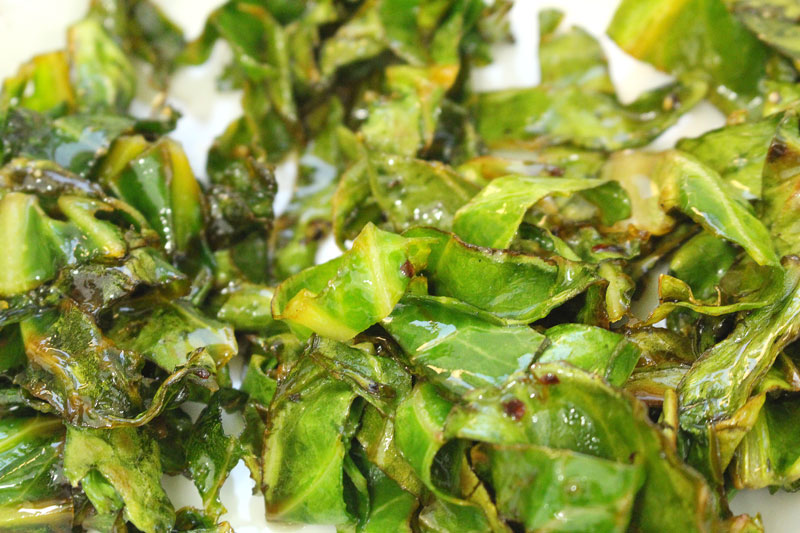
Bitter-Greens-8

Can I tell you something that I might not admit to my 12-year old self? I really like vegetables. I’m totally crazy about lots of other foods that she would enjoy too (hello bacon), but you know how people say that the more you eat healthy things the more you crave them? It’s actually been true for me.

We started subscribing to Abundant Harvest Organics in December of 2007. We’ve been on this journey for a while now. I’ve learned a lot. There are so many vegetables that I’d never heard of 7 years ago. Thankfully, now I know what a rutabaga is, that beets are enjoyable, and most recently, how to cook some really good greens.
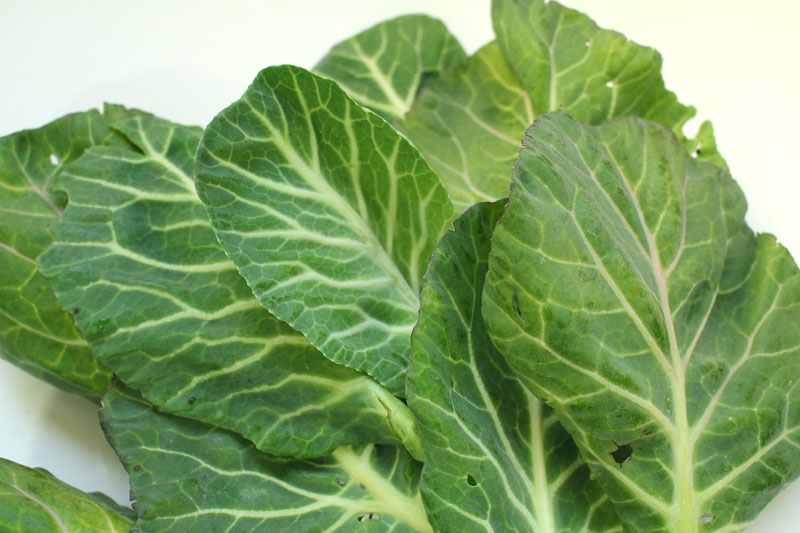
Bitter-Greens-2

I’ve always been a “use what I have”, practical, efficient cooker. Don’t have an ingredient? I’ll substitute for it. If I don’t think a step is needed, I eliminate it. But, sometimes there are steps that I didn’t know were a good idea, like blanching when cooking things like collard greens. I’d never done it, because I didn’t know I should.

Blanching is when you partially cook a food in boiling water then submerge it in an ice bath to stop the cooking.

I learned my lesson today.

I’ve never really been bothered too much by the bitterness in greens. I think because I’ve got the basics down: add fat and salt (not like a waaaay too much amount, a good amount, to make them taste great). Sometimes I add sugar and spice. These are things that I read about doing to reduce bitterness in greens. Cool. Checkmark. Done did.

But but but wait. I needed to see if I was missing out on something. So I did a little test: collard greens three ways.

Here’s what happened.

One bunch of collard greens was divided up into three groups (each had 3-4 medium sized leaves – a small test, but it worked out just fine).

Group 1
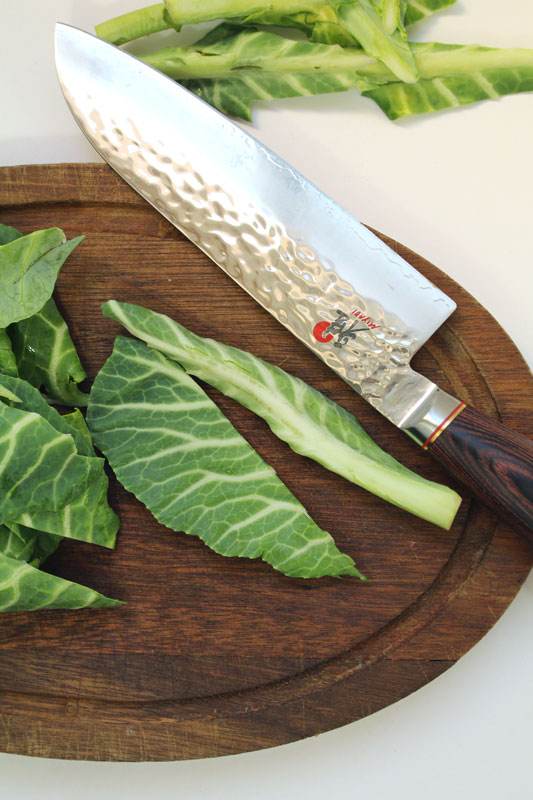
Bitter-Greens-1

Bitter-Greens-4

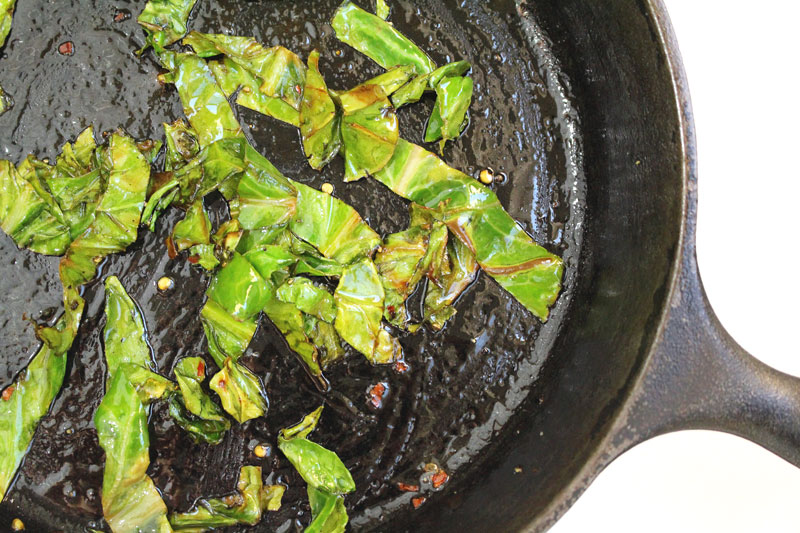
Washed with water, stems removed, sliced into ribbons.

Skillet heated, 1/2 t butter added, let it melt a bit, added honey, then added the greens. Added salt, pepper, red pepper flakes and cooked over medium-low for 2 minutes. 1 t lemon juice is added and they cook for 1-2 minutes more. They’re removed from the heat and 1/2 t olive oil is added, along with a splash of lemon juice.

Group 2
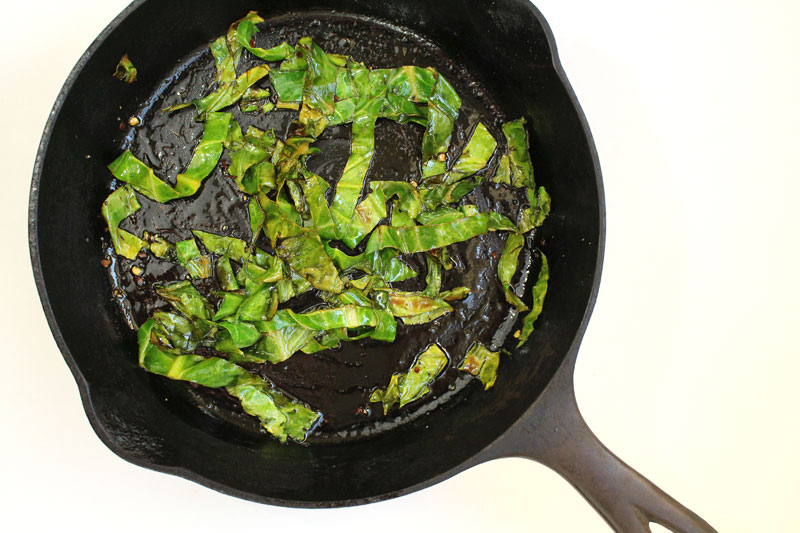
Bitter-Greens-5

Soaked in water and 1-2 t baking soda for a minute, then rinsed three times.

Skillet heated, 1/2 t butter added, let it melt a bit, added honey, then added the greens. Added salt, pepper, red pepper flakes and cooked over medium-low for 2 minutes. 1 t lemon juice is added and they cook for 1-2 minutes more. They’re removed from the heat and 1/2 t olive oil is added, along with a splash of lemon juice.

Group 3

Bitter-Greens-3

Bitter-Greens-6

Washed with water.

Stems removed.

Blanched: Salted water came to a boil, leaves were added, they cooked for about 2 minutes, then took a bath in some ice water for a few.

Sliced into ribbons.

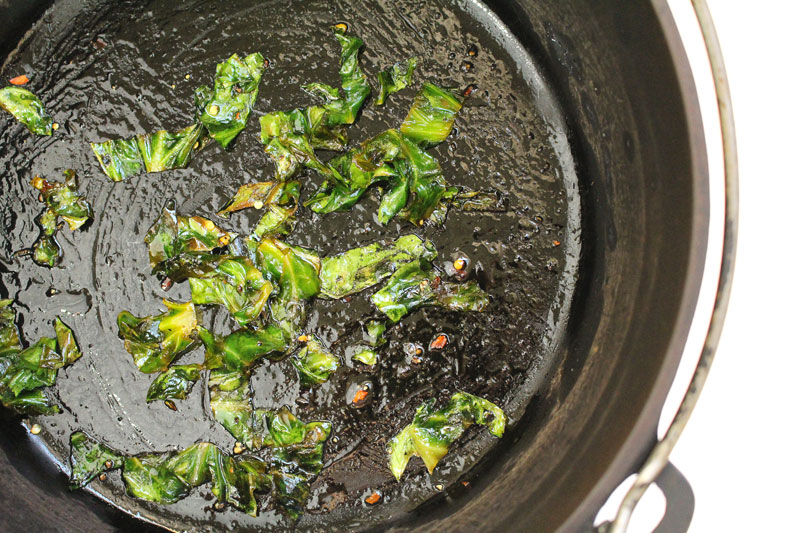
Skillet heated, 1/2 t butter added, let it melt a bit, added honey, then added the greens. Added salt, pepper, red pepper flakes and cooked over medium-low for 2 minutes. 1 t lemon juice is added and they cook for 1-2 minutes more. They’re removed from the heat and 1/2 t olive oil is added, along with a splash of lemon juice.

Group three was way for sure 100% the winner. I guess I’m gonna blanch from now on.
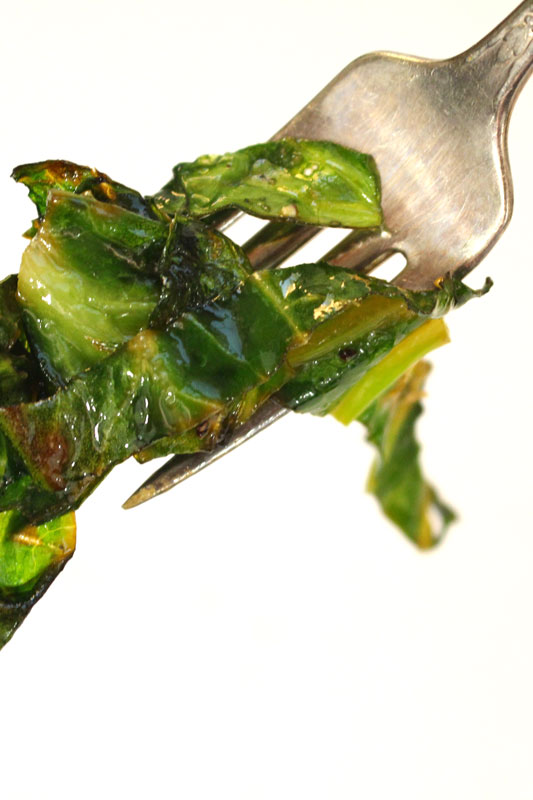
Bitter-Greens-7

They were tender, they kept their color, and most importantly, they were the least bitter.

I stood at the stove and ate the entire pan.

I used the leftover greens from groups 1 and 2 and tossed them with some leftover Mac and Cheese, topped it with crushed up homemade croutons and a bit of Parmesan cheese, and baked it until it was hot. Made for an easy, delicious dinner. Groups 1 and 2 weren’t bad. I’d even say they’re good. But, when you compare good with great, you gotta go with great (hello life lesson).

I don’t know if the baking soda soak really did much for group two. They may have been a little more tender and a little less bitter than group 1. Just a little. I probably wouldn’t bother with this step again. But, it was fun to try.

In general, to reduce the bitterness of leafy greens like turnip greens, collards, mustard greens, kale, spinach, chard, broccoli rabe, and beet greens, there are a few tricks:

Cooking the greens (sautéeing, simmering, braising, blanching) mellows them out (some ways more than others, some better when combined, like I learned today). Tougher greens, like the collards that I used today, will do better when blanched, than say a daintier baby spinach.

Adding salt “takes the edge off”. (1)

Adding fat softens the bitterness and adds flavor. (1) (3)

Adding spice masks the bitterness.

You can add lemon juice or salt to help reduce bitterness. (3)

Add baking soda to water when washing then rinse three times. (2)

Some recipes that I like (or would like to try) with these greens:

Wilt ‘Em Greens

Browned Butter Pasta with Italian Sausage and Basil

Orzo Pasta with Kale and Italian Sausage

Braised Collard Greens

Happy Eating!

Blanched and Sautéed Collard Greens
Recipe Type: Vegetables, Vegetarian, Sautéed, Side Dishes, Dinner, Greens, Quick and Easy, Blanching
Author: Rachel Oberg – De Ma Cuisine
Prep time:
Cook time:
Total time:
Serves: 2-3
Ingredients
  • 16 collard green leaves, washed, stems removed
  • water (for boiling)
  • salt (for boiling)
  • 2 t butter
  • 2-4 t honey
  • to taste salt
  • to taste pepper
  • to taste red pepper flakes
  • 3-4 t lemon juice
  • 2 t olive oil
  • lemon juice, for topping
Instructions
  1. Bring salted water to a boil. Add leaves and cook for about 2 minutes. Remove from water and place in a bowl of ice water for a few minutes.
  2. Slice into ribbons.
  3. Heat skillet and add butter, let it melt a bit, add honey, then add the greens. Add salt, pepper, red pepper flakes and cook over medium-low heat for 2 minutes, stirring often.
  4. Add lemon juice and cook for 1-2 minutes more.
  5. Remove from the heat and add olive oil.
  6. Serve topped with a splash of lemon juice.

(1) LA Times

(2) Yahoo Answers

(3) ehow
Monday

24

February 2014

0

COMMENTS

Winter Frittata

Written by , Posted in Breakfast, Brunch, Dairy-Free, Dinner, Eggs, Fruit, Gluten Free, Herbs, Kid-Friendly, Leftovers, Lunch, Main Dishes, One Dish Dinners, Potatoes, Quick and Easy, Vegetables, Vegetarian

WinterFrittata-3

When I have a lot of produce to use up, I usually make soup. But, another great way to get those veggies into a dish: FRITTATA!!

I like to change things up sometimes, and have breakfast-y foods for dinner. Last night we had this super frittata with some roasted brussels sprouts and cauliflower, that were drizzled with honey… mmm mmmmm… let’s not get distracted here, we’re all about the frittata right now… ooh, but you could add brussels and cauliflower to it too!

Back to what I was saying. Ahem… I like breakfast for dinner. It’s fun. It’s different. It’s easy.

Easy go-to’s are pancakes, french toast, bacon and eggs. You know, the usual. Sometimes I forget about the simple frittata.

It’s not an omelet, because there’s no flipping. It’s not a quiche, because there’s no crust. What it is: simple deliciousness.

WinterFrittata-7

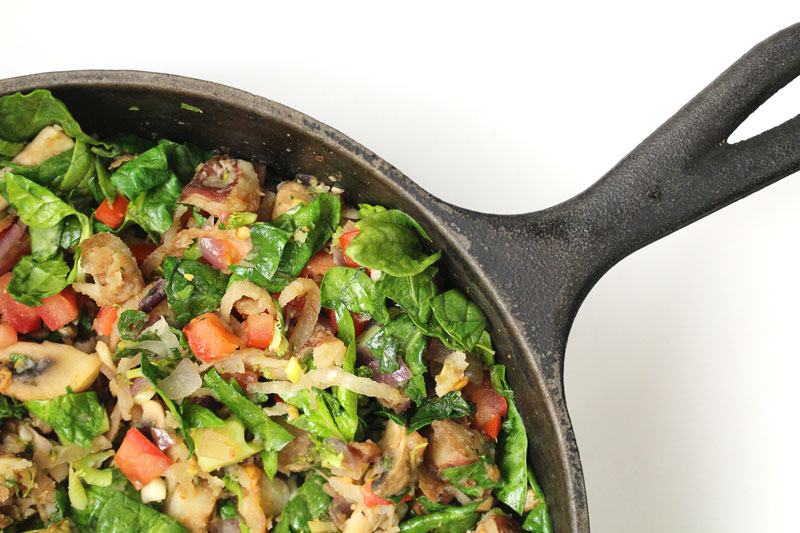
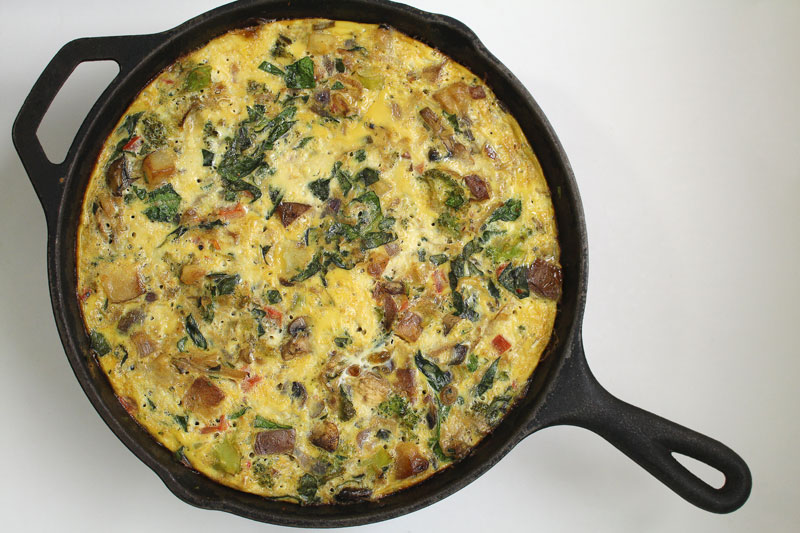
Veggies are sautéed. I chose seasonal produce, so used broccoli, black spanish radish, spinach, onion, garlic, and potato. I also used some not in season tomato, and some mushrooms. You could use whatever veggies you think would taste good together and with eggs.

Make it a mix and match kinda dish.

Just broccoli and spinach would be great, if you want to simplify. Once the spring veggies are here, asparagus could be substituted for broccoli. Kale, chard, collards, or mustard greens could be used instead of the spinach. Any kind of radish would be great.

Let’s get creative!

WinterFrittata-5

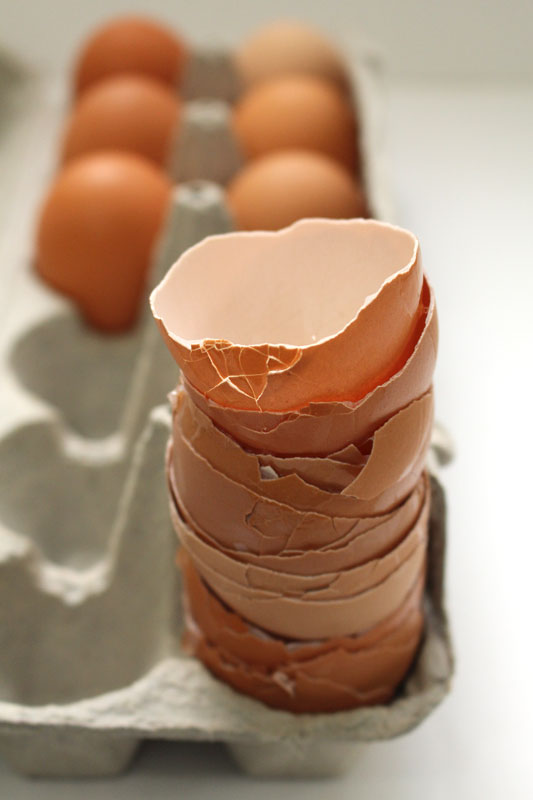
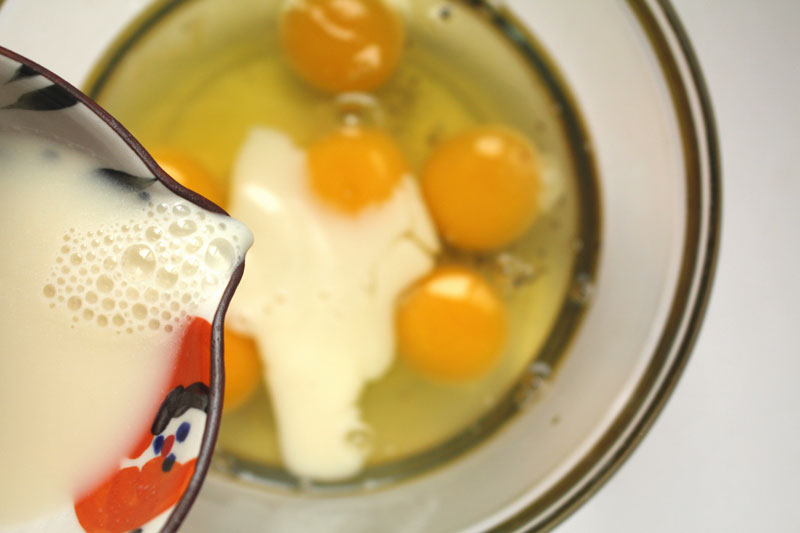
My favorite eggs around are from Burroughs Family Farms. Thick brown shells and golden yolks. Best best best.

WinterFrittata-6

Almond milk is added. You can use whatever kind of milk you prefer. And if you don’t want to use milk, water will work just fine too.

WinterFrittata-4

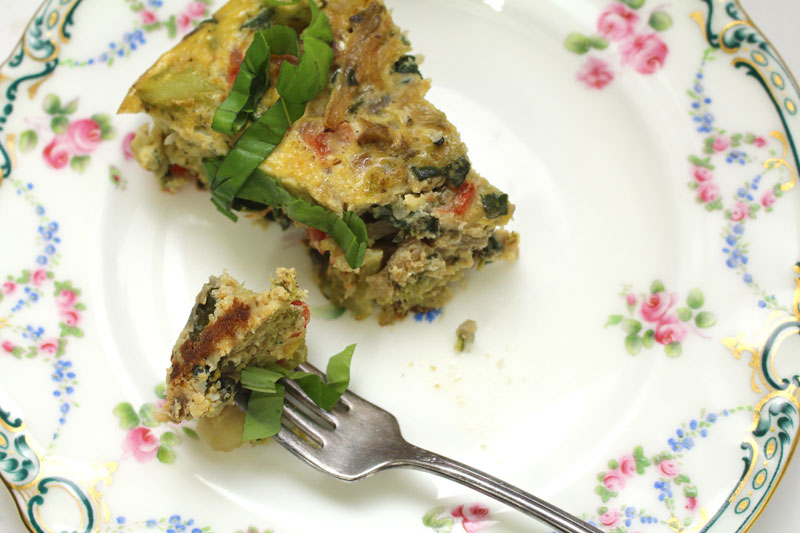
Basil is cut into thin ribbons, or a chiffonade. If you don’t want to do this, chop chop chop it up.

WinterFrittata-2

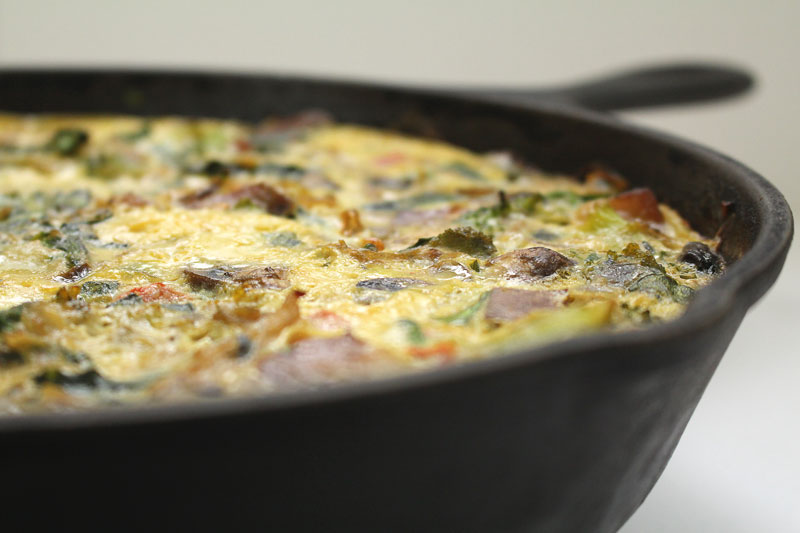
This frittata is full of veggies that are held together by some eggy goodness. It’s perfect for breakfast, lunch, or dinner. Leftovers can be halved and eaten on toast with some cheese, or frozen for another week.

If you hate leftovers, invite some friends over and share a meal. You could serve the Winter Frittata with some crostini topped with Parmesan cheese and honey, some slices of ripe melon, and some crispy bacon (if you’re so inclined).

WinterFrittata-1

Happy Eating!

Winter Frittata
Recipe Type: Breakfast, Lunch, Dinner, Main Dishes, One Dish Dinners, Gluten-Free, Dairy-Free, Vegetarian, Vegetables, Quick and Easy
Author: Rachel Oberg – De Ma Cuisine
Serves: 6-8
Ingredients
  • 1-2 T olive oil
  • 1/2 onion, chopped
  • 1 C broccoli, roughly chopped
  • 1/4 to 1/2 C radish, grated
  • 6 mushrooms, roughly chopped
  • 1-2 C potatoes, cooked* and cubed (I used leftovers)
  • 1 stalk green garlic, chopped
  • 1 stalk spring onion, chopped
  • 2 cloves garlic, diced
  • to taste salt
  • to taste pepper
  • 1/4 t red pepper flakes
  • 1 t fresh parsley
  • 1/4 t dried thyme
  • 1 T balsamic vinegar
  • 1 tomato, chopped
  • 2-3 C spinach (or kale, chard, collards, mustard greens), roughly chopped
  • 6 eggs
  • 1/2 C almond milk
  • fresh basil, chiffonade-style or chopped, for topping
Instructions
  1. Pre-heat oven to 375F.
  2. Heat an ovenproof skillet. When it’s hot, add oil. (*If using raw potatoes cook for about 15 to 20 minutes, covered, stirring occasionally, until they are fork tender, then proceed with next steps.) When oil is hot add onion through mushrooms and cook over medium-low heat for 5 minutes, stirring occasionally.
  3. Add potatoes through thyme and cook for 5 minutes, stirring occasionally.
  4. Add vinegar, tomato, and greens and cook, stirring often, for about 2 minutes. Taste and adjust seasoning if needed.
  5. Whisk eggs and milk together with a pinch of salt and pepper. Pour eggs into skillet and stir. Cook for a minute or two, stir again, and cook for about 5 minutes more, or until eggs are beginning to set.
  6. Transfer skillet to oven and cook for 15-20 minutes, or until eggs are set and have come to an internal temperature of 160F.
  7. Remove from oven and let stand for 10 minutes.
  8. Serve topped with basil.
3.2.1269


Wednesday

19

February 2014

10

COMMENTS

Paris Potatoes

Written by , Posted in Brunch, Dinner, Gluten Free, Kid-Friendly, Lunch, Potatoes, Quick and Easy, Sides, Travel, Vegetables, Vegetarian

Paris-Potatoes-3

Remember that time that I went to Paris, then came home and talked about it a lot? Sorrynotsorry. I’m still kinda obsessed.

You may remember that I mentioned (more than once, again… not really sorry) a place called Au Bon Coin. We ate there quite a few times and loved it. I have a need for potatoes like that in my life. I’ve spent some time trying to get them perfect. I think that’s impossible. Perfection will happen only when we’re back in Paris, seated in that tiny, crowded, amazing café with our friend, Simone and her dog, Pom.

Paris-Potatoes-7

But, a little less than perfect is still really delicious.

Paris-Potatoes-6

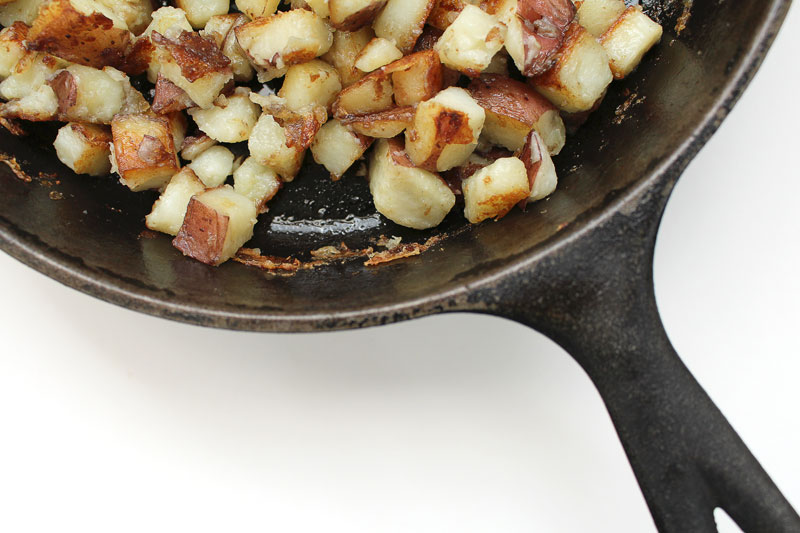
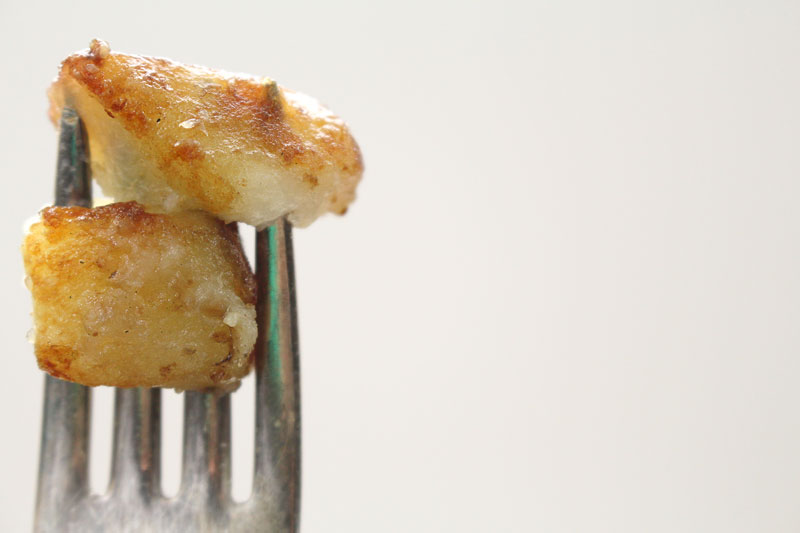
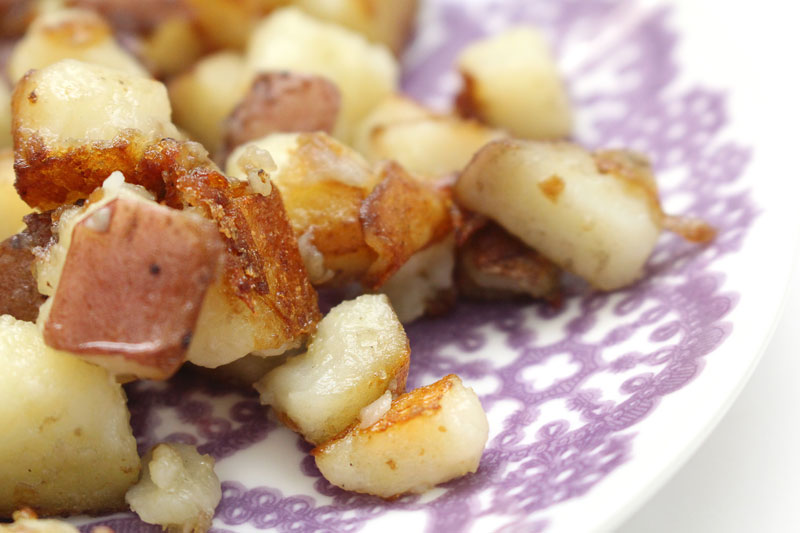
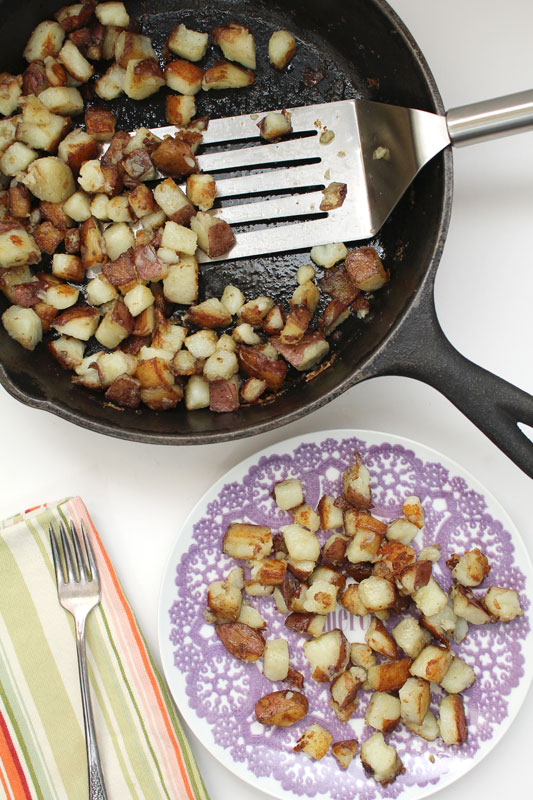
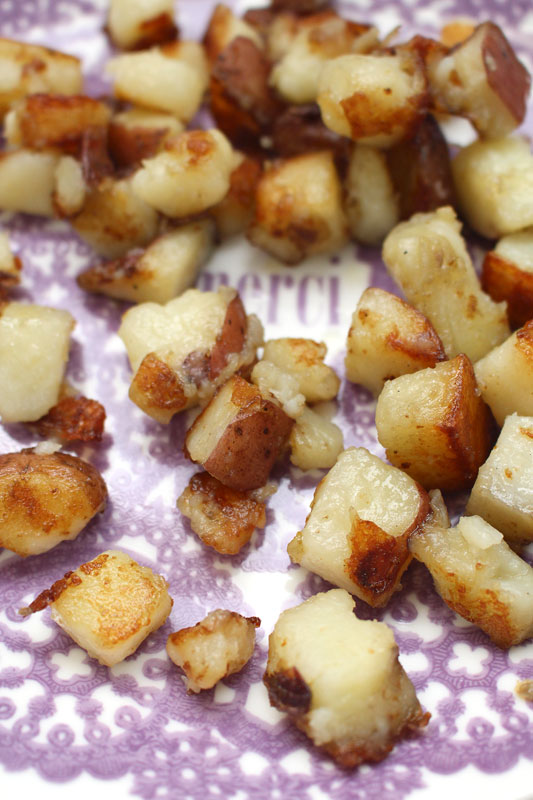
These potatoes have a texture and crunch unlike the fried potatoes that I normally make. Fried potatoes are a staple in our home. They’re simple and delicious (cut potatoes, fry in oil, eat). I wasn’t sure, but I thought that the Paris potatoes might require something else. An extra step.

Paris-Potatoes-1

Paris-Potatoes-2

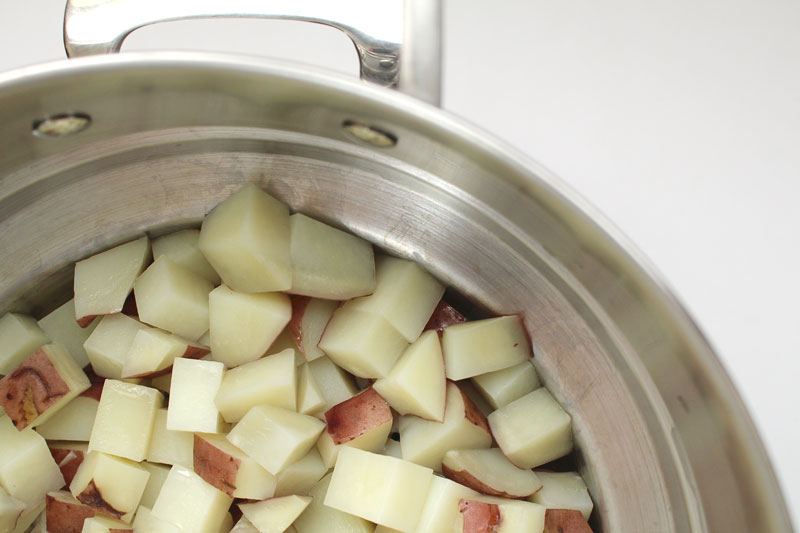
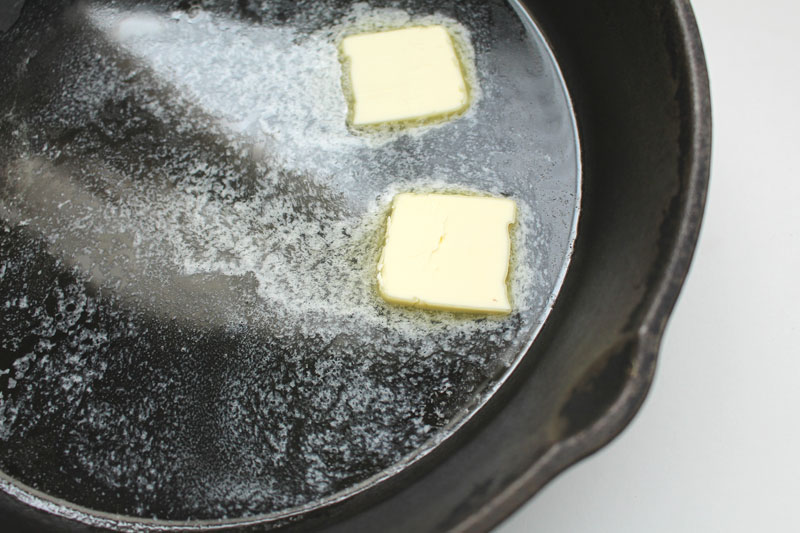
I steamed them first, then cooked them in a good amount of butter and olive oil.

Simple.

The first time I made them I flipped each potato individually, to be sure each side was perfectly browned. I don’t think this is necessary, but it was kinda fun to put that much care into a dish. The second and third times, I just flipped them all. That worked just fine.

Paris-Potatoes-4

Now please excuse me while I eat some of these this entire panful and watch a slideshow of our 3,000 photos from Paris.

Paris-Potatoes-5

Bon Appètit!

Paris Potatoes
Recipe Type: Side, Potatoes, Dinner, Gluten-Free, Kid-Friendly, Quick and Easy, Vegetarian, Vegetables
Cuisine: French
Author: Rachel Oberg – De Ma Cuisine
Prep time:
Cook time:
Total time:
Serves: 2-4
My version of some of the best potatoes we had in Paris at Au Bon Coin.
Ingredients
  • 4 red potatoes, cut into medium-sized chunks (peeled if you want)
  • water (for steaming)
  • 2 T unsalted butter
  • 1-2 T olive oil
  • to taste salt
Instructions
  1. Bring water to a boil in a large pot. Add potatoes to a steamer basket and place in pot. Cover. Cook for 15 minutes, or until potatoes are pretty tender.
  2. Heat a large skillet over medium heat. Add butter and oil. When oil is hot, add the potatoes and salt. Cook for about 5 minutes (don’t turn them until they’ve crisped sufficiently), then turn every 3 minutes or so, for about 9-10 minutes total, or until potatoes are crispy (adding the last 1 T of oil if needed).
  3. Taste and add more salt if needed.


Thursday

13

February 2014

0

COMMENTS

Vegan Roasted Butternut Squash Soup

Written by , Posted in Dinner, Fruit, Gluten Free, Holiday, Lunch, Main Dishes, Roasting, Soups, Storage/Prep, Vegan, Vegetables, Vegetarian

RoastedButternutSquashSoupVegan-9

There are some serious nutrition trends out there. Here’s one that I can wholeheartedly embrace… no pun intended… Heart Healthy Eating.

Let’s do this.

Let’s get on the bandwagon.

Let’s treat out hearts well.

And, at the same time, let’s feed ourselves and our loved ones a delicious dinner.

You in? I am.

Let’s start with some soup. A creamy, dreamy, super simple butternut squash soup.

RoastedButternutSquashSoupVegan-1

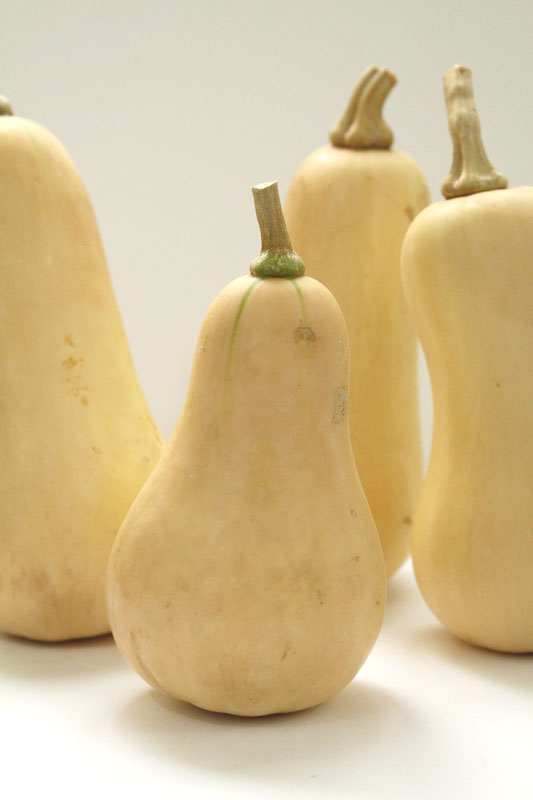
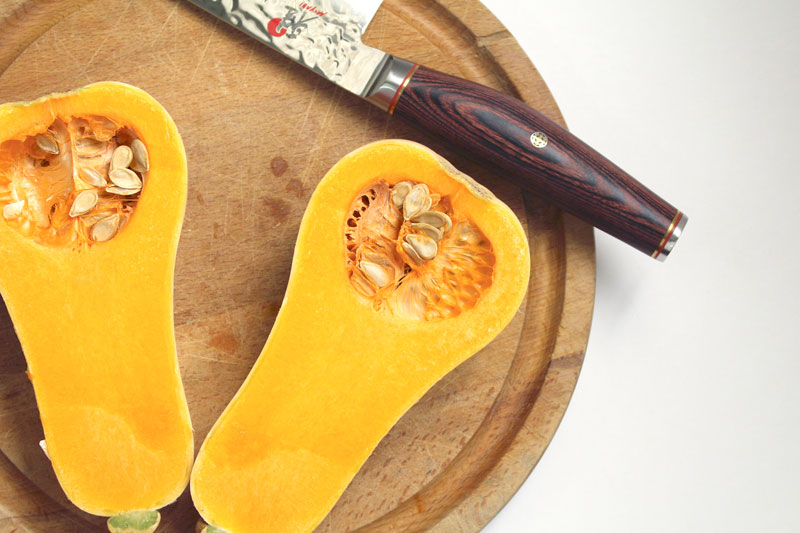
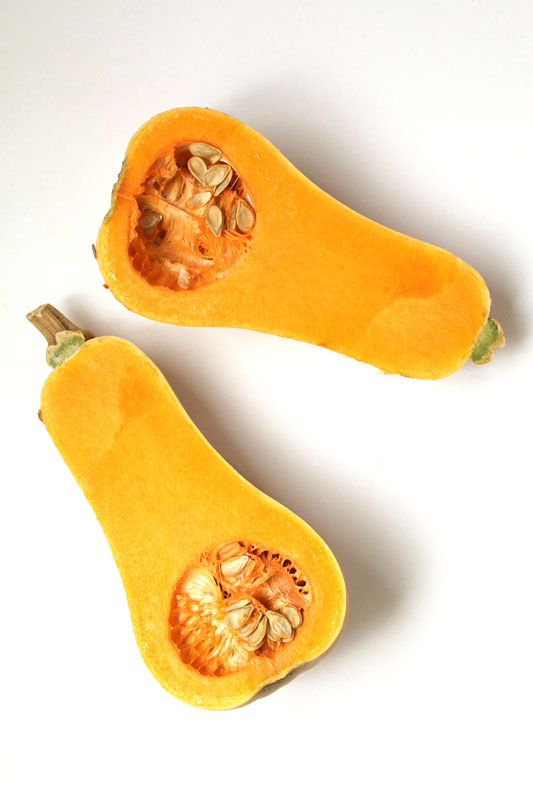
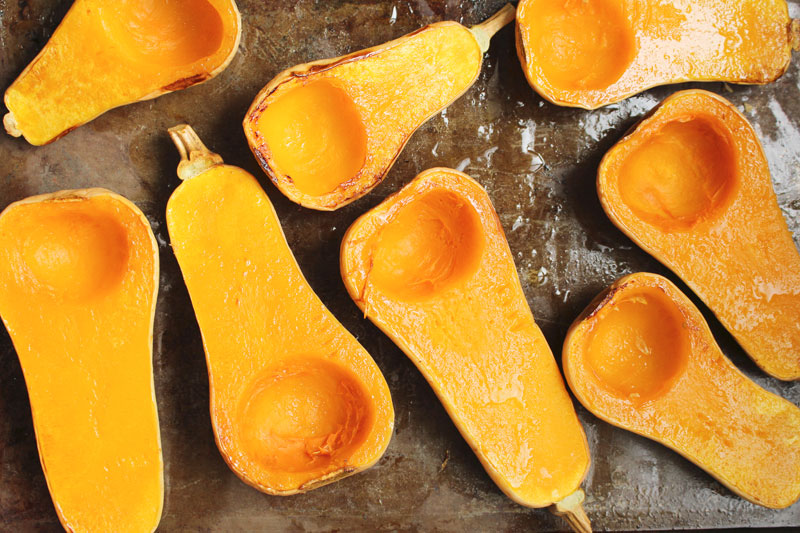
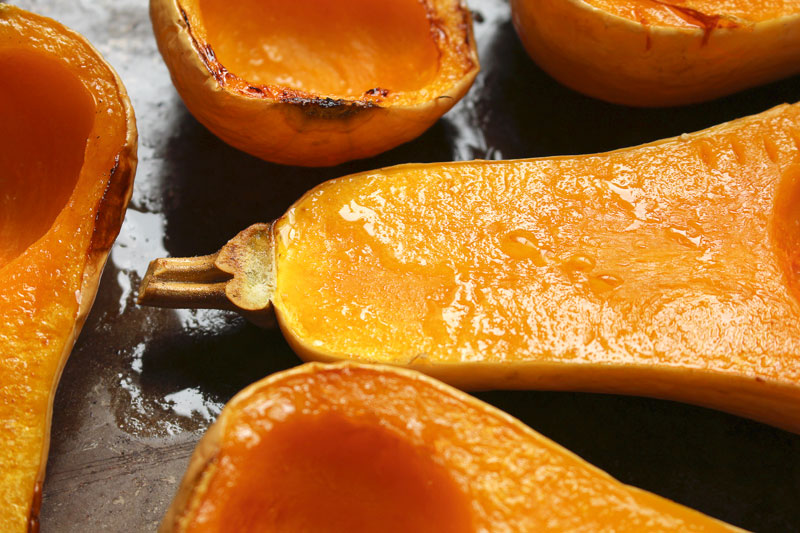
The squash is halved, seeds scooped out (and saved for another time – they will be seasoned and roasted), drizzled with olive oil, and roasted.

RoastedButternutSquashSoupVegan-2

RoastedButternutSquashSoupVegan-3

RoastedButternutSquashSoupVegan-4

RoastedButternutSquashSoupVegan-5

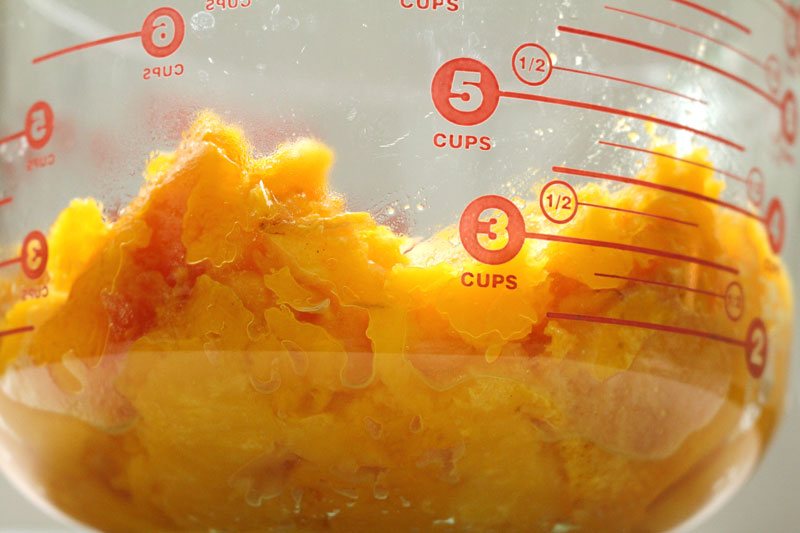
The sweet roasted flesh is scooped out. We will need about 3-4 cups for our soup.

RoastedButternutSquashSoupVegan-6

This is a simple recipe. You won’t be stuck in the kitchen all day. Squash is the main ingredient, and it’s accented by honey, thyme, coconut milk, and some spices.

Trust me. This is a good one.

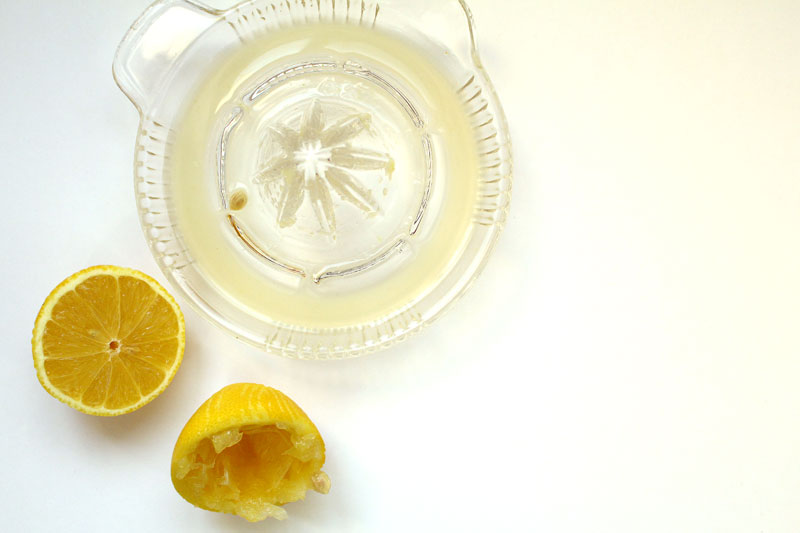
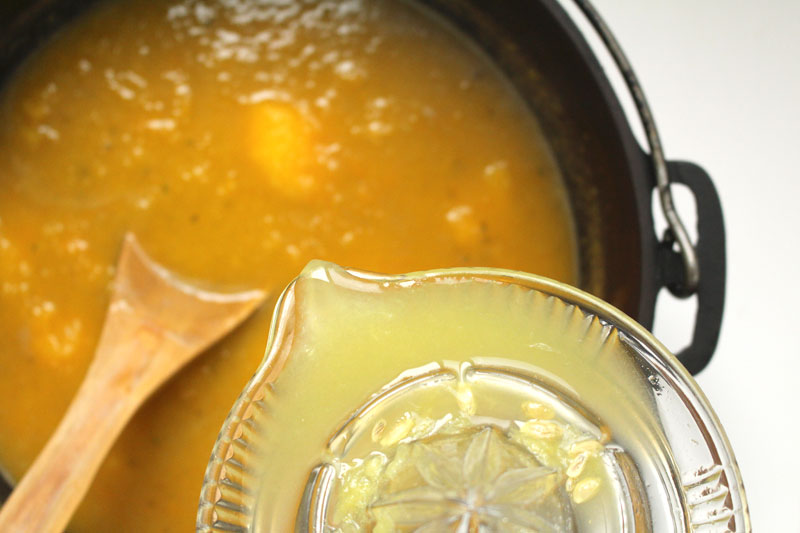
After the soup comes together on the stove for a few minutes, lemon juice is added. It brightens the soup and gives it a bit of a tang… just a bit.

ChardWraps-6

RoastedButternutSquashSoupVegan-7

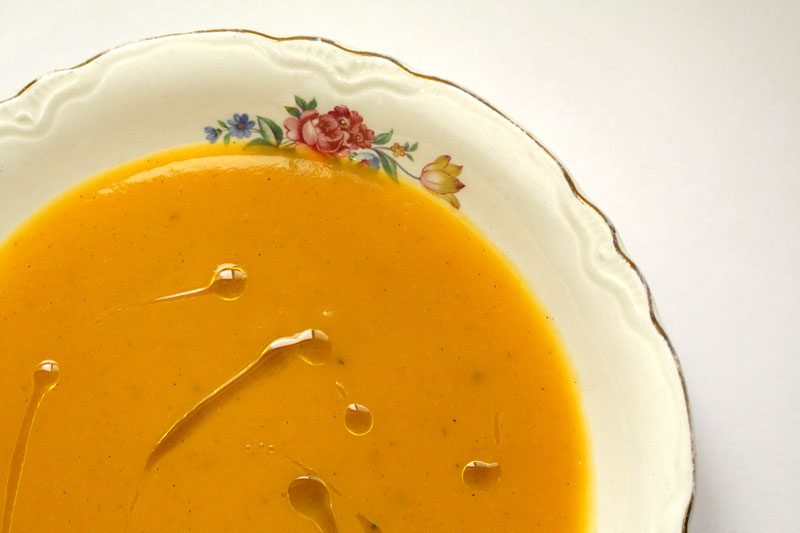
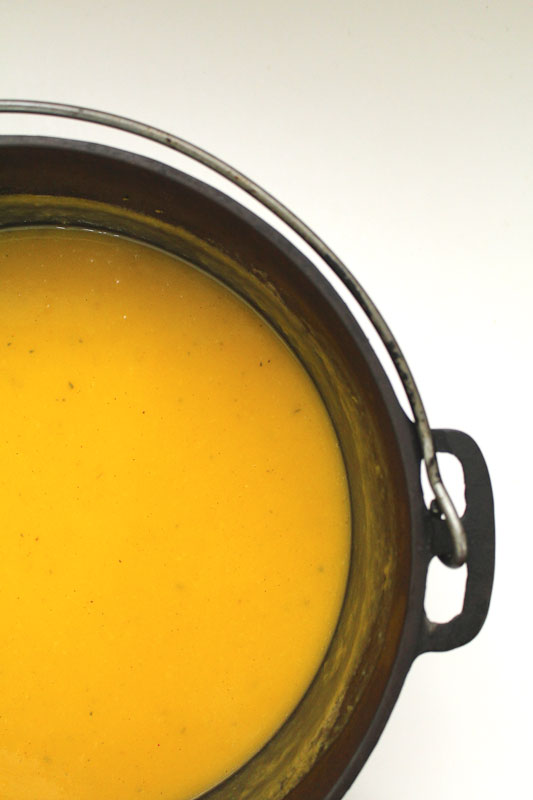
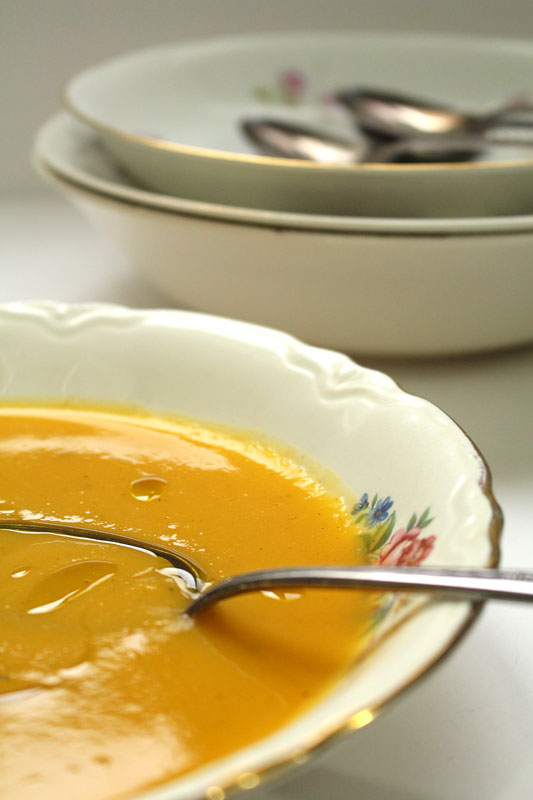
The soup is puréed with a hand blender (or your favorite countertop blender – be sure to remove the plug in the lid and cover with a clean tea towel). It’s the smoothest, creamiest soup I think I’ve ever made.

I’m ready for seconds.

RoastedButternutSquashSoupVegan-8

This soup is so wonderfully good for you. Why?

Let’s look at the color. We’re told to eat a rainbow of colors (um, we’re talking fruits and veggies though, sorry Froot Loops, you are not included here). I’ve read that these colorful fruits and veggies are not just pretty, they contain bioflavonoids that are shown to “have anti-inflammatory, anti-allergic, antiviral, and anti-cancer properties” (4).

This bright orange vegetable is suuuuper high in vitamin A, it’s a great source of vitamin C, and a good source of folic acid, magnesium, potassium, vitamins B6 and E.

For the heart, it’s got Omega-3 fatty acids, (the heart relies on fatty acids for fuel – two that are essential are omega-3 and omega-6 fatty acids (4)) it’s very low in fat, and has no cholesterol. (1) (2) (3) It’s a good source of dietary fiber. Diets that are low in fat (especially saturated fats) and high in fiber are a great way to lower cholesterol, which in turn can improve your heart’s health. (4)

Niacin, also found in butternut squash, can help lower LDL cholesterol (the bad one) and raise HDL cholesterol (the good one – it “is a fat that campaigns for free-flowing blood, and never sticks around to cause trouble in the arteries” (4)). Niacin can also help lower “fibrinogen, a blood protein that causes clot formation”. (4)

I’ve mentioned cholesterol quite a bit. Should we talk about why it’s bad? Easy, it’s a killer. It can lead to heart disease, or coronary artery disease. Let’s get off that road and on to a road to good heart health.

RoastedButternutSquashSoupVegan-10

For your heart healthy Valentine’s Day dinner (or any dinner, really), I’ve come up with a four course menu that’s full of delicious goodness.

Starter

Vegan Roasted Butternut Squash Soup

Salad

Warm Arugula and Orange Salad

Main Course 

Oven Roasted Chicken

Chard Wraps with Quinoa and Walnuts

Honey Roasted Carrots

Dessert

Ginger Squash Cake with White Chocolate Frosting

Happy Heart Healthy Eating!

Vegan Roasted Butternut Squash Soup
Recipe Type: Healthy, Dinners, Main Dishes, Side Dishes, Starters, Soups, Vegan, Vegetarian, Gluten-Free, Dairy-Free, Easy Meals
Author: Rachel Oberg – De Ma Cuisine
Prep time: 20 mins
Cook time: 75 mins
Total time: 1 hour 35 mins
Serves: 4-6
A heart healthy and delicious soup. Perfect to start a meal or to star as the main dish.
Ingredients
  • 4 small butternut squash (about 3-4 C when cooked), halved, seeds removed
  • 2 t olive oil
  • 1/8 t allspice
  • pinch cayenne
  • pinch nutmeg
  • 1/2 t dried thyme, crumbled (or 1/2 T fresh thyme, chopped)
  • 1 T honey
  • to taste, salt
  • 1 to 1 1/2 C coconut milk
  • 2 C water (or more if desired)
  • 1 T lemon juice
  • olive oil, for serving
Instructions
  1. Pre-heat the oven to 350F.
  2. Drizzle the cut side of the squash with olive oil. Place oil side down on a baking sheet. Bake at 350F for 45-60 minutes, or until flesh pierces easily with a fork.
  3. Scoop flesh out of skin and place in a soup pot. Add seasonings, honey, coconut milk, and water. Cover and bring to a boil. Uncover, and reduce to a simmer and cook for 10 minutes, stirring occasionally.
  4. Remove from heat. Add lemon juice. Blend to desired consistency (with a hand blender or a countertop blender). Taste and adjust seasoning.
  5. Serve with a drizzle of good olive oil.
3.2.1269

(1) Nutrition Almanac, Mc Graw-Hill 2001, Fifth Edition, Lavon J. Dunne

(2) http://nutritiondata.self.com/facts/vegetables-and-vegetable-products/2648/2

(3) Agricultural Research Service, United States Department of Agriculture

(4) Nature’s Medicines, Rodale Inc. 1999, Gale Maleskey

Friday

7

February 2014

1

COMMENTS

Heart Healthy Chard Wraps with Quinoa and Walnuts

Written by , Posted in Dinner, Fruit, Gluten Free, Grains, Lunch, Main Dishes, Quick and Easy, Quinoa, Sides, Vegan, Vegetables, Vegetarian

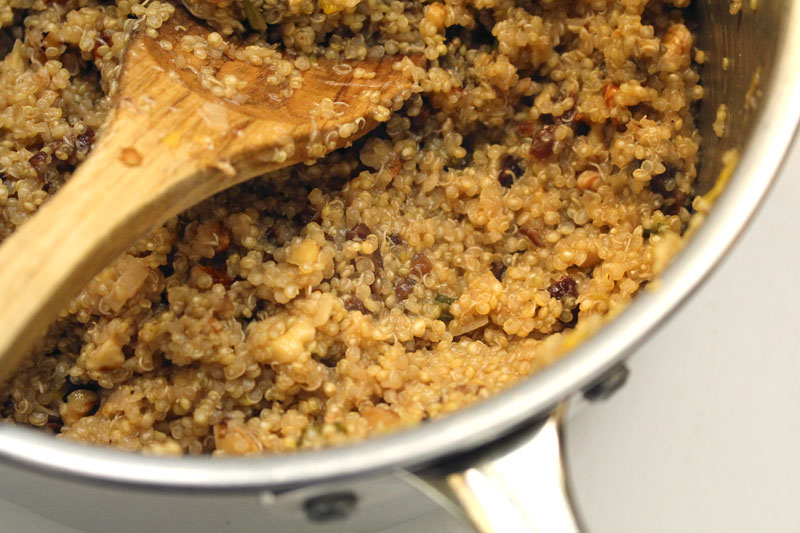
ChardWraps-1

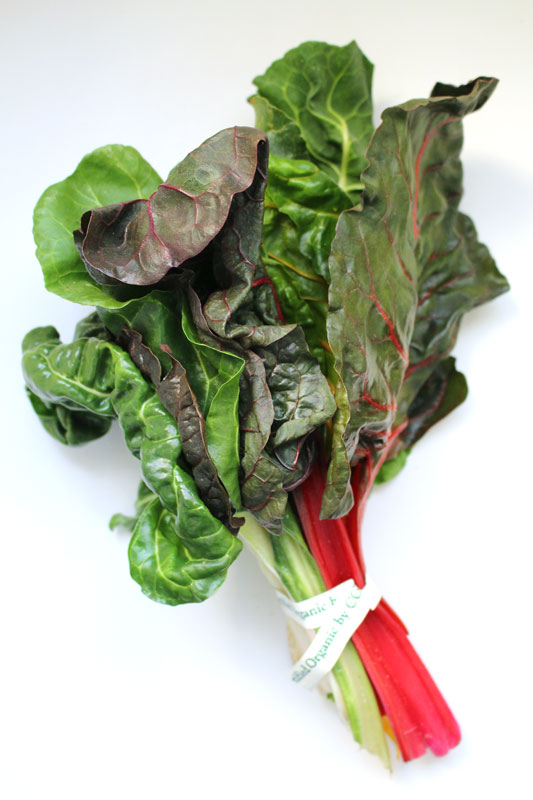
I’ve read that leafy greens are good for you. Some of you might be sighing and wishing I was wrong. But, it’s just true. So let’s all cheer for greens!

ChardWraps-7

Specifically, let’s go crazy for chard.

Want to know why it’s great for you?

One cup of chard has: 1.8 mg vitamin C (antioxidant, protects LDL cholesterol)‚ 18 mg calcium (strong bones), 30 mg magnesium (conducts electrical impulses of muscles and nerves), 136 mg potassium (“regulates water balance in the body” and “stimulates nerve impulses for the heart”) (1)‚ …to name just a few.

What it doesn’t have: a lot of fat and cholesterol (0.08 g fat, and 0 mg cholesterol ). (1)

Chard and other fruits and veggies contain antioxidants, which, along with other compounds, “prevent plaque from building up on the arterial walls, reduce blood pressure, and strengthen heart muscles.”‚ (1)‚ 

Let them eat chard.

ChardWraps-4

Let’s talk about quinoa.

One cup of quinoa has: 22 g protein, 10 g fiber, 83 mcg folic acid, 4.98 mg niacin (vitamin B3) (“important for blood circulation and reducing cholesterol levels in the blood”) (1), 102 mg calcium, 357 mg magnesium, 697 mg phosphorus, and 1258 mg potassium. (1)

Know what it doesn’t have a lot of? Fat and cholesterol (9.9 g fat – 1 g saturated – the bad kind, 2.6 unsaturated – the good kind, 4 g monounsaturated – the good kind, 0 g cholesterol) (1).

Hello heart health.

ChardWraps-5

Walnuts, walnuts, walnuts.

One cup has: 14.8 g protein, 6.7 g fiber, 98 mcg folic acid, 99 mg calcium, 380 mg phosphorus, 450 mg potassium, 47 g unsaturated fat, and 8.9 g monounsaturated fat. (1)

Know what they don’t have a lot of? Saturated fat (4.5 g) and cholesterol (0g). (1) 

Walnuts contain omega-3 fats, which “inhibit blood clotting, encourage activity of the parasympathetic nervous system, increase blood flow, protect against heart arrhythmia, dissolve clots, lower blood triglycerides, raise HDL cholesterol, and have anti-inflammatory properties.” Omega-3 = clearer arteries. (1)

Notice a trend?

ChardWraps-3

Why do these things matter? Why should you care?

Here’s why…

It’s simple, the heart is a necessary component for life. So let’s treat our hearts to wonderful fruits and veggies, good fats and lean proteins, and plenty of vitamins and minerals.

ChardWraps-2

Happy Eating!

Heart Healthy Chard Wraps with Quinoa and Walnuts
Recipe Type: Main Dishes, Side Dishes, Healthy, Quick and Easy, Greens, Dinners, Vegetarian, Vegan, Gluten-Free, Dairy-Free
Author: Rachel Oberg – De Ma Cuisine
Prep time:
Cook time:
Total time:
Serves: 4-6
These quick and easy wraps are full of nutrients and heart healthy goodness.
Ingredients
  • 1 T olive oil
  • 3-4 small or 2 large leeks, washed well and chopped
  • 1 spring onion, chopped
  • 1 C quinoa
  • 1 lemon, zested
  • 1/4 C raisins, chopped
  • dash cayenne
  • to taste, salt
  • to taste, pepper
  • 2 C water
  • 1/2 C walnuts, chopped
  • 1 lemon, juiced
  • toothpicks
  • 6-8 large chard leaves (leave 1″-2″ of stem)
  • salt
  • water
Instructions
  1. Heat a medium saucepan and add oil. Add leek and onion. Cook over medium heat for 3-5 minutes.
  2. Add quinoa, lemon zest, raisins, cayenne, salt, and pepper. Cook for about 2 minutes.
  3. Add water, cover, and bring it to a boil. Uncover and cook for 10 minutes, or until quinoa is cooked.
  4. Stir in walnuts and lemon juice. Taste and adjust seasoning.
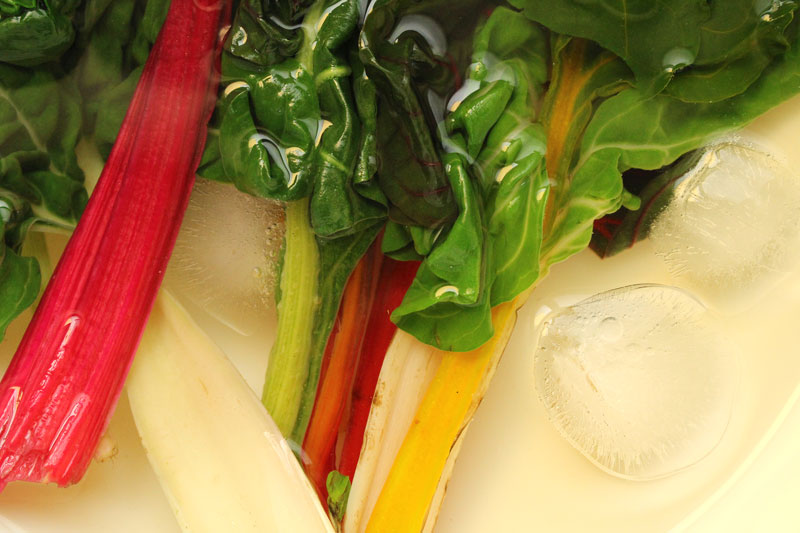
  5. Heat a large pot and add water and salt. When water is boiling add chard and cook for 1 minute. Transfer to a bowl of ice water to stop cooking. (Save boiled water to make vegetable stock.)
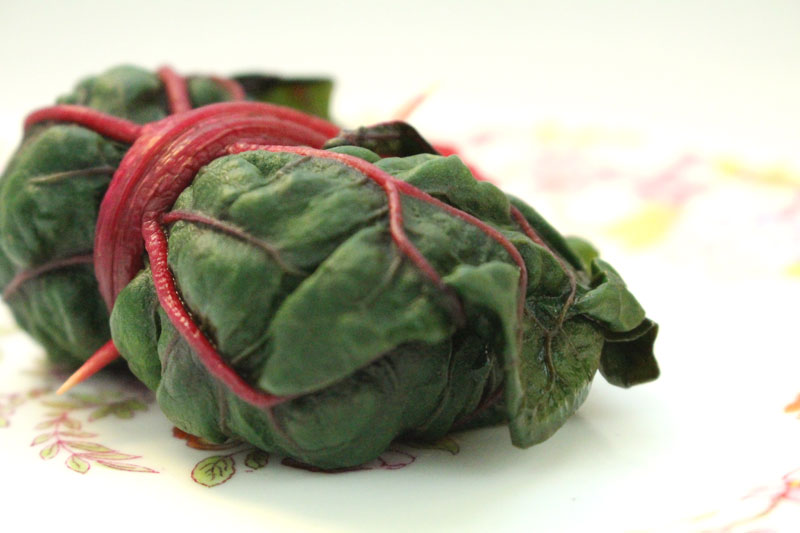
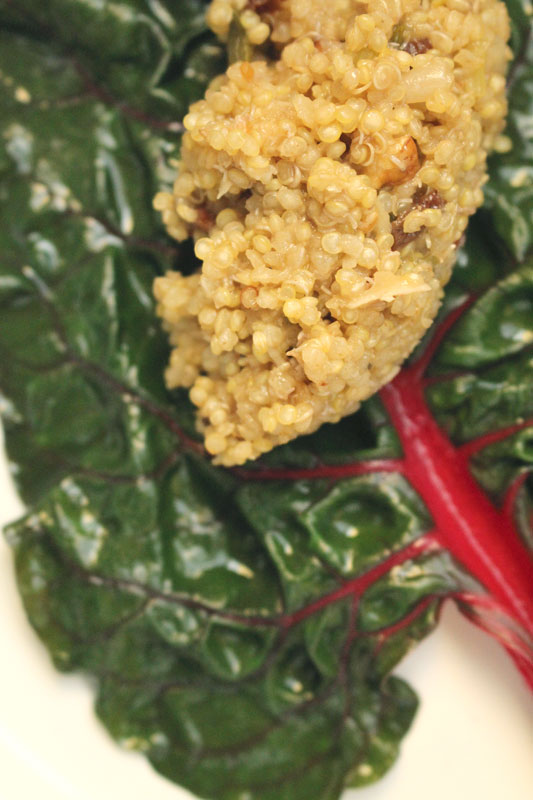
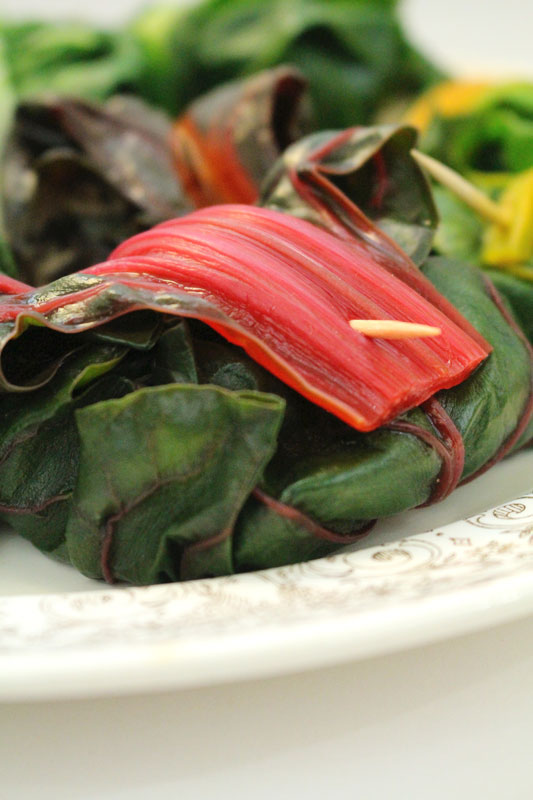
  6. Scoop some of the quinoa filling on to the center of the chard leaf. Wrap the sides inward, then wrap the top and bottom to overlap the sides. Secure the stem with a toothpick.
Notes
To re-heat add a bit of vegetable stock or water to the bottom of a pan. Add the wraps. Cover with foil and bake at 350F for about 45 minutes, or until the filling comes to 165F.

Note: I’m not a healthcare professional. I’ve done a little bit of looking around. These are just some thoughts. Ok? Cool? Cool.

(1) Nutrition Almanac, Mc Graw-Hill 2001, Fifth Edition, Lavon J. Dunne